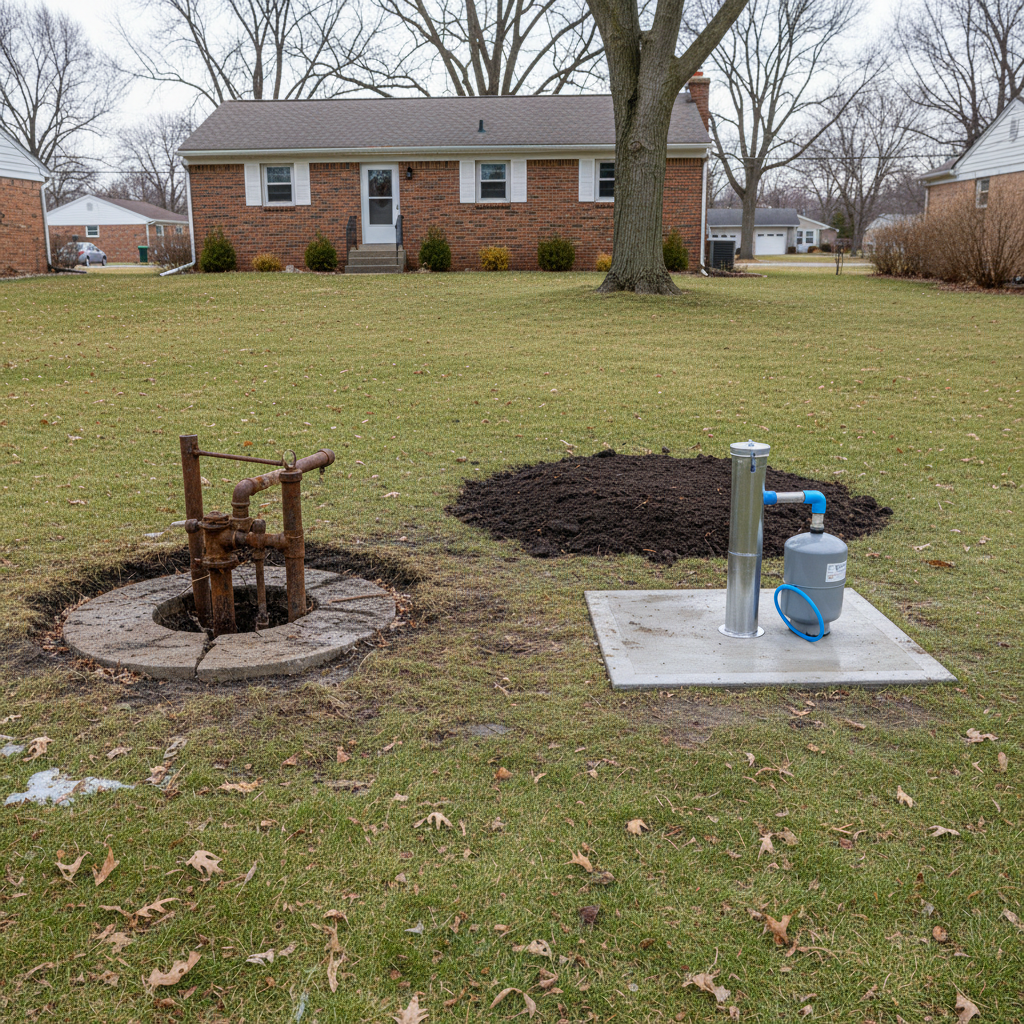
So, you're looking at getting a new well installed, huh? Maybe your old one's seen better days, or you're building new out in the country past Richland, and you need a reliable water source. Good for you for doing your homework. When it comes to putting a hole in the ground for water, there are two main ways we go about it: rotary drilling and cable tool drilling. Each has its place, and knowing which one is right for your property here in Southwest Michigan is pretty important.
Rotary Drilling: Fast and Efficient
Let's talk about rotary drilling first, because it's what most people picture when they think about well drilling these days. You've got a big rig with a rotating drill bit that grinds through the earth, pushing down with a lot of force. We use drilling mud or air to flush out the cuttings as we go, keeping the hole clean.
Speed: This is where rotary really shines. It's fast. We can often get a well drilled in a day or two, sometimes even quicker depending on the depth and geology. If you're on a tight schedule, rotary is usually the way to go.
Cost: Generally, the up-front cost for rotary drilling can be a bit lower than cable tool, mostly because of that speed. Less time on site means less labor cost for us, and that gets passed on to you. However, there can be hidden costs if the ground is tricky.
Durability & Maintenance: Rotary wells are usually cased with PVC, which is durable enough for most conditions. The well screen, which is how the water actually enters the well, is often a pre-packed screen or a slotted PVC screen. They're pretty low maintenance if installed correctly.
Appearance: The equipment is big, but the process is relatively clean. You'll have a bit of mud around, but it's usually contained and cleaned up pretty well.
When it's great: Rotary is fantastic for softer formations – sand, gravel, clay, that kind of stuff. Most of Kalamazoo County has a good mix of these, so it's often a solid choice. It's also good for deeper wells where speed is a factor.
Cable Tool Drilling: The Old Reliable
Now, cable tool drilling, that's a different beast. It's an older method, sometimes called 'percussion drilling,' and it's a bit like a giant hammer. A heavy drill bit is repeatedly lifted and dropped into the ground, breaking up the earth. We add water to the hole to create a slurry, and then we bail out the cuttings. It's slower, no doubt about it, but it's incredibly effective in specific situations.
Speed: Slower. Significantly slower. A cable tool well can take several days, sometimes a week or more, depending on the depth and the rock we hit. It's not for the impatient.
Cost: The initial cost can be higher due to the extended time on site. However, in certain ground conditions, it can actually be more cost-effective in the long run because of the quality of the well it produces.
Durability & Maintenance: This is where cable tool really stands out. We typically use steel casing, which is incredibly robust. The well screen is often a custom-fabricated stainless steel screen, designed specifically for the aquifer. Because it disturbs the aquifer less, these wells often yield more water and have less sand and sediment. They're built to last for generations, and maintenance is usually minimal.
Appearance: The equipment is still big, but the process is a bit messier with the bailing. We do our best to keep things tidy, but expect a bit more disruption.
When it's great: If you've got hardpan, cobbles, or bedrock – like some of the tougher glacial till we see around here, especially if you're getting closer to the Allegan County line – cable tool is king. It can punch through stuff that would give a rotary rig a real headache. It's also excellent for developing a well in tricky, layered aquifers, allowing us to get a much better seal and a cleaner, more productive well.
My Recommendation for Kalamazoo Homeowners
Look, for a lot of properties right here in Kalamazoo, especially in the more suburban areas with consistent sand and gravel, a rotary drilled well is perfectly fine. It's quick, it's cost-effective up front, and it'll give you good water.
But if you're out in the sticks, or if we hit some really tough ground during exploration, or if you just want the absolute most robust, long-lasting well you can get, I'm going to lean towards cable tool. It's an investment, sure, but it pays off in terms of reliability and longevity, especially with our sometimes unpredictable Michigan geology. For instance, if we're dealing with the kind of mixed glacial deposits that can be a real pain, with layers of clay, sand, and then big boulders, cable tool can handle it without breaking a sweat, where a rotary rig might struggle to maintain a straight, clean bore.
When Mighty Well Drilling comes out to your property, we'll assess the geology, talk about your water needs, and give you an honest recommendation based on what we think will serve you best in the long run. We've been doing this a while, and we know what works around here.
```